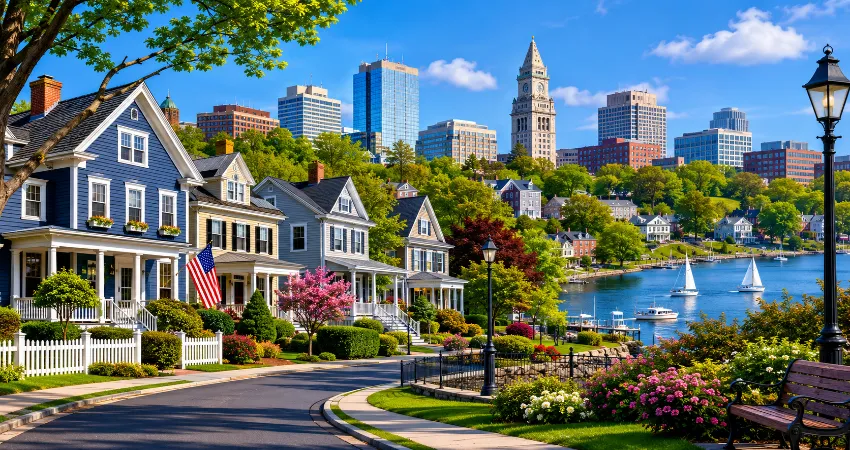
Massachusetts continues to attract families, professionals, students, entrepreneurs, and retirees because of its strong economy, nationally recognized healthcare system, excellent educational institutions, and diverse communities.
Whether someone is relocating for work, searching for better schools, or looking for a neighborhood with a high quality of life, choosing the right residential area is one of the most important decisions they will make.
After reviewing housing trends, local amenities, transportation access, public school quality, employment opportunities, safety, and long-term desirability, it becomes clear that demand is driven by more than property prices alone. Buyers and renters increasingly prioritize neighborhoods that provide convenience, community, green spaces, and long-term value. The following guide explores fifteen of the most sought-after residential areas across Massachusetts while explaining what makes each location attractive for different lifestyles.
This guide is designed to help prospective homebuyers, renters, investors, and relocating families better understand the strengths of Massachusetts’ most desirable residential communities and make informed housing decisions.
Top 15 Best High-Demand Residential Areas In Massachusetts
1. Newton
Newton consistently ranks among the most desirable residential cities in Massachusetts. Known for its outstanding public schools, safe neighborhoods, abundant parks, and convenient access to Boston, it appeals strongly to families and professionals. The city offers a blend of historic homes, modern developments, and vibrant village centers. Residents appreciate the balance between suburban living and urban convenience, making Newton one of the state’s strongest long-term housing markets.
2. Lexington
Lexington combines historical significance with modern suburban living. The community is recognized for exceptional schools, well-maintained neighborhoods, and a family-oriented atmosphere. Large green spaces, recreational facilities, and community events contribute to a welcoming environment. Although housing costs remain relatively high, many buyers consider Lexington a worthwhile long-term investment because of its consistent demand.
3. Brookline
Located next to Boston, Brookline offers easy access to employment centers while maintaining its own unique identity. Tree-lined streets, excellent public transportation, diverse restaurants, and attractive parks make it highly desirable. Residents enjoy walkable neighborhoods, quality healthcare facilities, and a wide range of cultural attractions. Brookline remains popular among professionals, medical workers, and university staff.
4. Cambridge
Cambridge is internationally recognized for innovation, higher education, and technology. Beyond its academic reputation, it offers vibrant neighborhoods, extensive public transit, excellent dining, and numerous cultural experiences. Housing demand remains exceptionally strong due to employment opportunities, research institutions, and the city’s dynamic economy. Many residents appreciate its highly walkable lifestyle.
🔥 Don’t Miss These Opportunities

5. Belmont
Belmont provides a quieter suburban atmosphere while remaining close to Boston. Families often choose Belmont because of its excellent schools, attractive residential streets, and strong sense of community. The housing market is competitive, reflecting the area’s reputation for stability, safety, and long-term residential appeal.
6. Wellesley
Wellesley is well known for beautiful neighborhoods, prestigious educational institutions, and a charming town center. The community offers numerous parks, recreational facilities, and shopping areas. Residents benefit from commuter rail access, making travel into Boston relatively convenient. Strong property values have helped Wellesley remain one of Massachusetts’ premier residential destinations.
7. Needham
Needham attracts homebuyers seeking excellent schools, modern community services, and convenient transportation. The town features well-maintained parks, sports facilities, local businesses, and family-friendly neighborhoods. Continuous residential demand reflects both its quality of life and proximity to major employment centers.
8. Winchester
Winchester is admired for its picturesque neighborhoods, quality education system, and peaceful environment. Many homes feature traditional New England architecture, while nearby conservation areas provide outdoor recreation opportunities. The town’s commuter rail connection also appeals to professionals working in Boston.
9. Arlington
Arlington has become increasingly popular because of its blend of affordability, accessibility, and community character. Residents enjoy local restaurants, bike paths, parks, and public transportation. Young professionals and growing families appreciate Arlington’s balance between suburban comfort and urban convenience.
10. Somerville
Somerville has experienced significant residential growth over the past decade. Revitalized neighborhoods, expanding transit options, thriving local businesses, and strong employment opportunities continue attracting new residents. The city offers diverse housing options ranging from historic homes to modern apartment developments.
11. Medford
Medford provides convenient access to Boston while maintaining a more residential atmosphere. Parks, recreational spaces, educational institutions, and expanding transportation infrastructure contribute to increasing housing demand. Many buyers find Medford offers a practical balance between affordability and accessibility.
12. Quincy
Quincy has become one of the fastest-growing residential cities in eastern Massachusetts. Excellent public transportation, waterfront attractions, shopping centers, healthcare facilities, and a diverse housing market make it appealing to both first-time buyers and established families. Ongoing redevelopment projects continue enhancing its residential appeal.
13. Andover
Andover is frequently chosen by families seeking spacious neighborhoods, strong public schools, and a quieter suburban lifestyle. The town offers extensive recreational facilities, community programs, and convenient highway access. Stable home values and consistent demand make Andover attractive for long-term residency.
14. Sharon
Sharon is recognized for its natural beauty, quality education, and strong community involvement. Residents enjoy numerous lakes, conservation areas, walking trails, and recreational programs. The town’s peaceful environment continues attracting families looking for suburban living without sacrificing accessibility to nearby employment centers.
15. Westford
Westford has gained popularity due to its growing technology workforce, highly rated schools, and excellent quality of life. The town combines modern residential developments with preserved natural spaces, creating an attractive environment for families and professionals seeking long-term stability.
Factors That Make These Residential Areas Highly Desirable
Several characteristics consistently appear among Massachusetts’ highest-demand residential communities. High-performing public schools remain one of the strongest drivers for families. Reliable public transportation, especially commuter rail and subway access, significantly increases neighborhood appeal. Safe streets, healthcare availability, employment opportunities, parks, shopping districts, and community engagement all contribute to sustained housing demand. Areas that successfully balance convenience, recreation, and long-term property stability tend to experience continued residential growth.
Tips for Choosing the Right Residential Area
Every homebuyer or renter has different priorities. Families often prioritize school districts and neighborhood safety, while professionals may focus on commuting time and employment access. Retirees may value healthcare services, quieter communities, and recreational opportunities. Before selecting a neighborhood, it is helpful to visit multiple areas, explore local amenities, evaluate transportation options, compare housing costs, and consider future lifestyle needs. A thoughtful approach can lead to a better long-term residential experience.
Frequently Asked Questions
1. Which residential area in Massachusetts is best for families?
Newton, Lexington, Wellesley, Belmont, and Needham are frequently chosen by families because they offer excellent schools, safe neighborhoods, recreational facilities, and strong community support. These communities provide environments that are well suited for raising children while maintaining convenient access to employment centers.
2. Which Massachusetts city offers the easiest commute to Boston?
Brookline, Cambridge, Somerville, Medford, Quincy, and Arlington all provide convenient access to Boston through public transportation and major roadways. The best choice depends on commuting preferences, housing budget, and desired neighborhood atmosphere.
3. Are these residential areas suitable for first-time homebuyers?
Some locations such as Quincy, Medford, Arlington, and parts of Somerville may offer relatively broader housing options compared to premium markets like Newton or Wellesley. First-time buyers should carefully compare home prices, financing options, and long-term affordability before making a decision.
4. Why are Massachusetts home prices generally higher than many other states?
Massachusetts benefits from a strong economy, world-class universities, advanced healthcare systems, and a large concentration of high-paying jobs. Combined with limited housing supply in many desirable communities, these factors contribute to sustained housing demand and higher property values.
5. Which areas have the strongest long-term property value potential?
Communities with excellent schools, stable local economies, transportation access, and consistent housing demand often demonstrate stronger long-term value. Newton, Lexington, Cambridge, Brookline, and Wellesley have historically remained among the state’s most resilient residential markets.
6. Are these neighborhoods good for remote workers?
Yes. Many of these communities offer reliable internet infrastructure, quiet residential settings, parks, local cafés, libraries, and convenient access to business districts when occasional office visits are necessary. Remote professionals often appreciate the balance between productivity and lifestyle.
7. What should renters consider before choosing a neighborhood?
Renters should evaluate transportation options, lease costs, nearby grocery stores, healthcare facilities, schools if applicable, parking availability, neighborhood safety, and overall commuting time. Visiting the area at different times of day can also provide valuable insight into daily living conditions.
8. Which areas provide the best balance between suburban living and city access?
Belmont, Needham, Arlington, Winchester, and Medford successfully combine suburban comfort with convenient transportation to Boston. These communities appeal to residents who want quieter neighborhoods without giving up access to urban employment and entertainment.
9. Is investing in Massachusetts residential property a long-term decision?
Residential real estate should generally be approached as a long-term investment. While market conditions naturally change over time, desirable communities with strong schools, transportation, and employment opportunities have historically maintained steady residential demand.
10. How can someone choose the best residential area for their personal needs?
The ideal location depends on individual priorities, including budget, family size, commuting preferences, school requirements, lifestyle, and future plans. Comparing neighborhoods through personal visits, local market research, and careful planning helps buyers and renters select the community that best aligns with their goals.
Conclusion
Massachusetts offers an impressive variety of high-demand residential communities, each with distinct advantages for different lifestyles. Whether the priority is exceptional schools, convenient transportation, vibrant local amenities, or long-term housing stability, these fifteen locations consistently stand out among the state’s most desirable places to live.
By carefully evaluating personal needs alongside neighborhood characteristics, prospective residents can confidently choose a community that supports both their current lifestyle and future goals.